
A settlement before the Norman town
Early settlement is supported by archaeology, but a precise founding date and the traditional early monastery remain uncertain.
Historical source ↗A sourced guide to Tewkesbury history: the Abbey, medieval trade, the battle of 1471, the town’s streets and modern flood resilience.
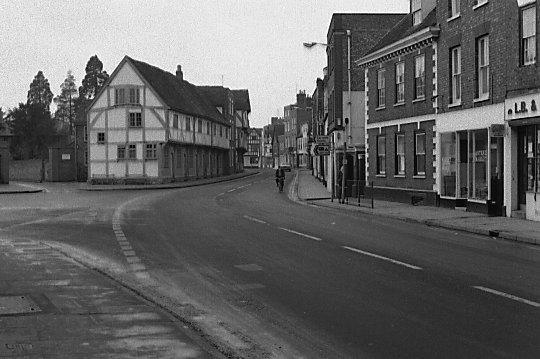
Rivers, trade, an enduring Abbey and a battle with national consequences: Tewkesbury’s story is still visible in its streets. This introduction separates documented events from early traditions and follows the town from its beginnings to the communities caring for its heritage today.
Early settlement is supported by archaeology, but a precise founding date and the traditional early monastery remain uncertain.
Historical source ↗The Abbey’s own history dates the start of construction of the surviving Norman church to 1102.
Historical source ↗The consecration established a landmark that would influence the town’s religious, economic and physical development.
Historical source ↗Edward IV’s Yorkist army defeated the Lancastrians south of the town in a decisive encounter of the Wars of the Roses.
Historical source ↗The monastery closed in 1540. Local people secured the Abbey church’s survival; the purchase was confirmed by royal grant in 1543.
Historical source ↗Elizabeth I’s charter incorporated Tewkesbury as a free borough and set out arrangements for civic government and markets.
Historical source ↗Thomas Telford’s cast-iron bridge provided a new crossing of the Severn and became a lasting feature of the town’s approaches.
Historical source ↗Severe flooding affected homes, businesses and essential services across the borough, becoming a defining event in recent local memory.
Historical source ↗Tewkesbury’s earliest history cannot be reduced to a single foundation date. Archaeological work identified settlement on the higher ground around the Oldbury. Researchers distinguish this evidence from the later tradition of an early religious community near the site of the Abbey.
Local accounts associate the town’s name with the hermit Theoc. It is an important part of the town’s inherited story, but should be read as tradition rather than a securely dated archaeological account of how the town began.
The present Abbey was built for a Benedictine community. Its Norman construction began in 1102, following Robert FitzHamon’s foundation, and the church was consecrated in 1121. Later generations altered and enriched the building rather than leaving it unchanged: medieval vaulting, tombs and stained glass belong to different chapters of its history.
Its scale helps explain why the Abbey remains the town’s most recognisable landmark. Today it is still a working church. Visiting its interior therefore means encountering a continuing religious and community life, as well as an exceptional historic building.
The rivers connected Tewkesbury to other trading places. Goods, market activity and local manufacturing supported a town whose history extends well beyond its famous battle. Brewing, malting, pin-making and stocking manufacture all feature in accounts of its economy; mustard became another familiar association.
Walk along Church Street, High Street and Barton Street and the buildings reveal successive periods of rebuilding and prosperity. Timber framing does not make every house medieval: much surviving fabric is later. The narrow alleyways add another way to read the centre, showing how life and work extended behind the main street frontages.
On 4 May 1471, the armies of Lancaster and York fought south of Tewkesbury. Edward IV’s victory and the death of the Lancastrian heir, Edward, Prince of Wales, dealt a major blow to the Lancastrian cause. Historic England registers the battlefield for its national historical importance and its surviving landscape.
The battle is best understood through the ground as well as the names of its commanders. Fields, slopes and watercourses mattered to the fighting and retreat. Local specialists continue to research and interpret the evidence; the battlefield trail offers a starting point for exploring the story without treating every later tradition as established fact.
The dissolution of the monastery in 1540 transformed the Abbey’s place in local life. The townspeople’s purchase preserved the church for parish use, while much of the surrounding monastic complex disappeared. Historical research distinguishes the closure from the royal grant confirming the purchase in 1543: these were stages in a process, not one interchangeable date.
Elizabeth I’s borough charter followed in 1574. Later changes to markets, street management and public buildings shaped the centre further. The Town Hall, completed in 1788, is one reminder that the familiar townscape also belongs to the history of local administration and changing commercial needs.
River crossings belong to the story of how Tewkesbury connected with the wider region. Mythe Bridge, designed by Thomas Telford and constructed in the 1820s, carries the road across the Severn. Its iron arch is both an engineering landmark and part of the everyday landscape around the town.
Water also brings disruption. The severe summer flooding of 2007 damaged homes and businesses across the borough and interrupted essential services. It remains a significant part of recent local memory. Historic flood accounts help explain the town’s relationship with its rivers, but they do not describe today’s conditions: check current official warnings before planning a riverside visit.
Tewkesbury’s heritage is not confined to a single monument. The John Moore Museum, established in 1980, brings together the writer and naturalist’s legacy, local buildings and the surrounding natural world. Its Merchant’s House and Old Baptist Chapel open different windows onto the town’s past. Museums, researchers, volunteers and the working Abbey all contribute to keeping that history accessible.
For a first history walk, combine the Abbey and historic streets with a museum or the battlefield trail. Check venue opening arrangements, respect private homes and follow local access signs. Source links below each section provide a route into deeper research rather than suggesting that this short introduction is the final word.